
When firefighters open the line, they expect the nozzle to respond instantly and predictably. A failure at that moment isn’t just an equipment issue, it affects safety, control, and the entire attack strategy. Below are eight failures no firefighter ever wants to experience, and the engineering principles that help prevent them
-
The valve getting stuck during use
-
Sudden changes in stream pattern
-
Leaks under pressure
-
A valve that becomes harder to move during the incident
-
Blockages from debris
-
Damage from drops, impacts, or rough handling
-
Unexplained changes in flow rate
-
Losing control of the line if the valve fails
The valve getting stuck during use
A valve that gets stuck, even for a moment, takes control away from the nozzle operator.
Prevention: internal surfaces designed to resist wear, plus long-cycle testing to ensure the valve continues to move smoothly after thousands of operations.
Sudden changes in stream pattern
If the pattern shifts on its own, narrow fog, wide fog, broken stream, the crew loses visibility and control.
Prevention: internal components that stay aligned under pressure, ensuring the stream behaves consistently.
Leaks under pressure
A leak around the valve or body reduces flow and wastes water
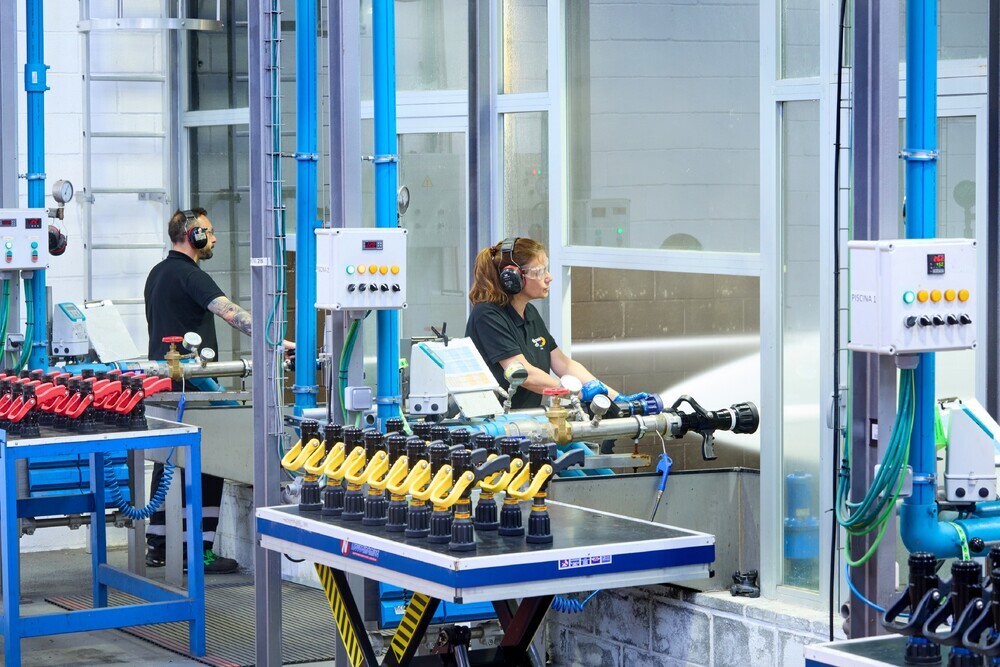
Prevention: precision-machined parts, durable seals, and individual testing to confirm the nozzle is leak-free.
A valve that becomes harder to move during the incident
If the valve gets stiff or unresponsive, especially while wearing gloves, the operator loses fine control.
Prevention: fatigue-resistant components and repetitive testing that confirms the valve stays easy to operate over time.
Blockages from debris
Ash, sand, dirt, and debris can enter and interfere with the internal movement of the nozzle.
Prevention: designs that prevents particles to go to greased parts of the nozzle. Greased parts shouldn’t be visible from the outside.
Damage from drops, impacts, or rough handling
Nozzles get bumped, dropped, or hit during interior attack, overhaul, and rapid movement.
Prevention: impact-resistant housings and internal mechanisms that maintain alignment even after mechanical shock.
Unexplained changes in flow rate
A sudden drop or surge in flow—without touching the valve—can compromise the attack line.
Prevention: strict quality control and testing of each individual nozzle to ensure consistent flow performance.
Losing control of the line if the valve fails
The worst scenario is not the failure itself, but the consequences:
- A whipping hose
- A line you can’t hold
- A tank that empties unexpectedly
Prevention: redundant safety systems that restore control instantly if the primary valve stops functioning.
Conclusion
Firefighters operate in unpredictable, high-stress environments. A nozzle must perform reliably regardless of heat, debris, pressure changes, or physical impact. Preventing these ten failure modes requires:
- Long-cycle valve testing
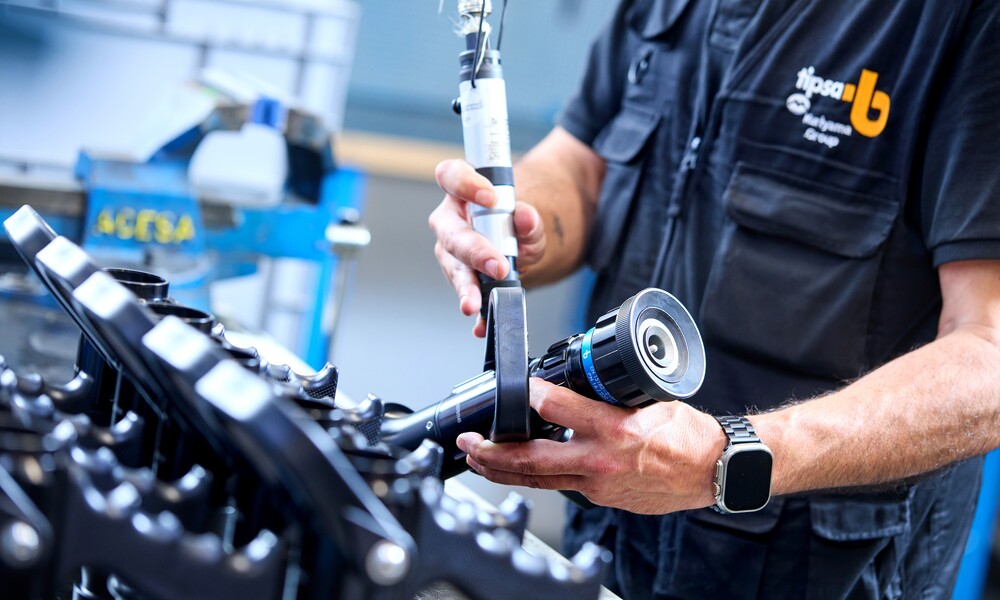
- Individual unit testing
- Fail-safe closure systems
- Durable internal materials
- Stable and predictable flow paths
These engineering principles allow firefighters to trust that when they open the line, the nozzle will respond exactly as expected—because in the heat of the moment, reliability is the difference between control and chaos.