Lay flat hoses for wells are becoming an increasingly popular alternative to traditional rigid pipes, offering easier installation, simplified maintenance and long-term reliability in groundwater applications.
Selecting the right drop system is a critical decision when installing a submersible pump. While rigid pipes have been the traditional solution for decades, flexible lay-flat hoses are increasingly being adopted in water well applications because they reduce the time and man- hours required for installation, significantly reduce the maintenance cost and improve long-term system performance.
Understanding the differences between Rigid Pipe or Flexible Lay flat Hose solutions facilitates the Water Well Drilling Contractors, the Well Drilling and Pump Service companies and the Water Systems Engineers to select the best suited system for each project
What Is the Difference Between a Flat Hose and a Rigid Pipe?
Rigid pipe systems are assembled using multiple threaded sections connected from the pump to the wellhead. Although effective, they are heavier, require more labour during installation and can make pump maintenance more challenging.
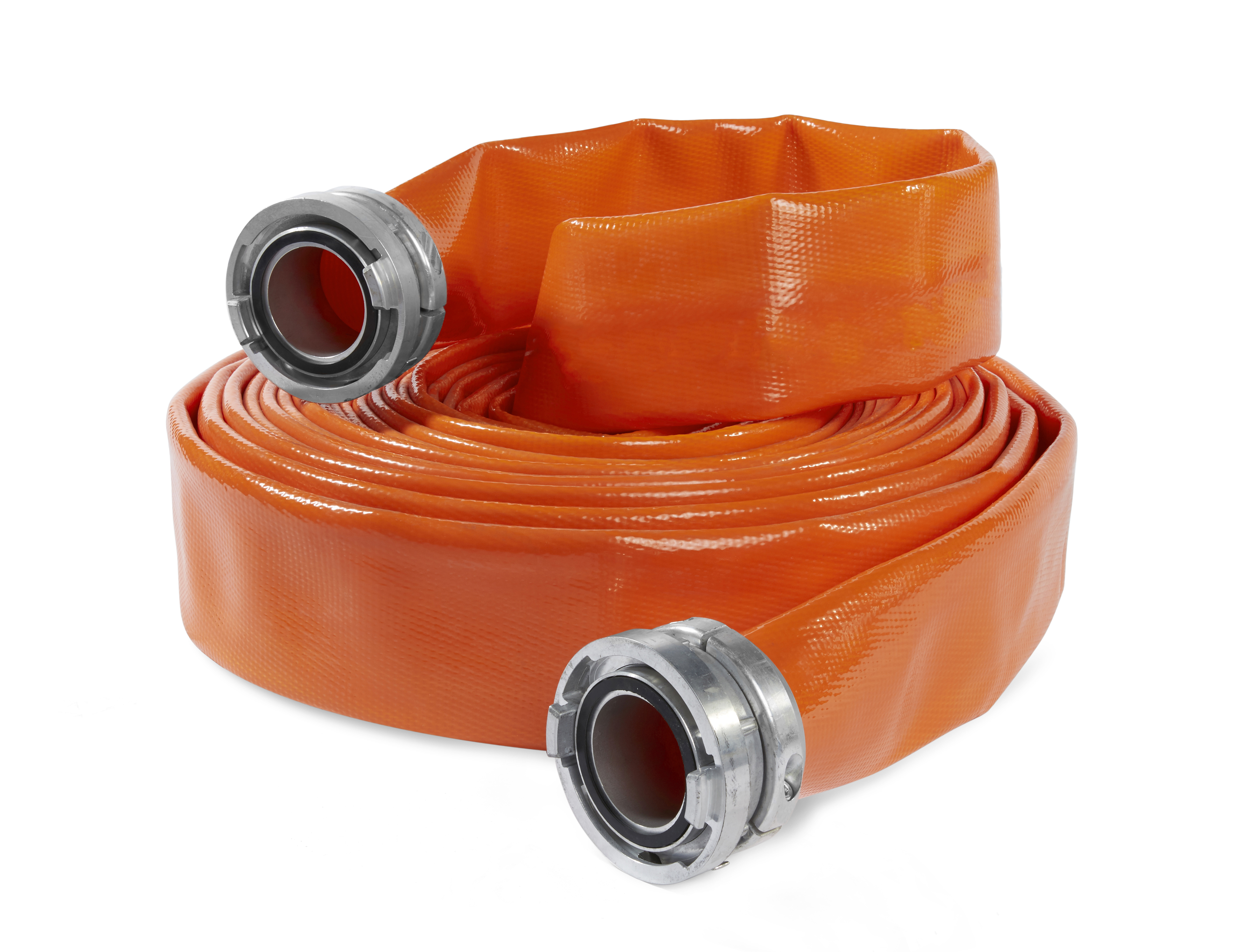
A flat hose—also known as a flexible drop hose or lay-flat hose, is installed in long continuous lengths. Its flexibility allows it to adapt to the well while reducing installation complexity and making future maintenance considerably easier.
1. Faster Installation with Lower Labour Requirements
One of the greatest advantages of a flat hose is the speed of installation.
Because the hose is lightweight and available in long continuous lengths, installers spend less time assembling threaded pipe sections, handling heavy components and positioning lifting equipment. This helps reduce installation time, labour costs and overall project complexity.
2. Easier Pump Retrieval and Maintenance
Every submersible pump will eventually require inspection, servicing or replacement.
A flexible hose simplifies pump extraction by reducing the weight and handling associated with rigid pipe systems. This not only shortens maintenance operations but also helps reduce the risk of damaging—or even losing—the pump during retrieval, particularly in deep wells.
3. Better Performance in Narrow or Deviated Wells
Most boreholes are not perfectly straight. Slight deviations from the intended drilling path are common due to geological formations, drilling conditions and normal drilling tolerances. As a result, flexibility becomes an important advantage in many water well installations.
Unlike rigid pipe, a flexible hose naturally follows the geometry of the borehole, making installation easier in narrow or deviated wells where rigid systems can be more difficult to install and remove safely. This flexibility also simplifies future pump maintenance and helps reduce the risk of damaging or losing the pump during retrieval.
4. Corrosion-Free Operation
Metal pipes can suffer from corrosion, scale formation and microbiological attack over time.
Flexible lay-flat hose is resistant to corrosion and scaling, helping maintain hydraulic performance while reducing maintenance requirements. It also performs well in aggressive water conditions with pH values between 4 and 9.
5. Higher Hydraulic Efficiency
Hydraulic efficiency directly affects pumping costs.
A properly engineered flat hose can transport a greater volume of water than conventional rigid pipe of the same nominal diameter, helping reduce energy consumption throughout the life of the installation.
6. Long Service Life
A quality flexible hose is designed for long-term operation and repeated pump maintenance without significant wear.
The system can be removed and reinstalled when necessary, providing a service life that exceeds 20 years under normal operating conditions.
7. Long Continuous Lengths for Deep Well Installations
One of the key advantages of flexible lay-flat hose is its availability in long continuous lengths, reducing the number of mechanical connections required during installation.
As a manufacturer, TIPSA offers continuous hose lengths of up to:
- 1,000 metres (3,281 ft) for 1¼" diameter.
- 500 metres (1,640 ft) for diameters from 1½" to 4".
- 300 metres (984 ft) for diameters from 5" to 8".
Other continuous lengths can also be manufactured to meet specific project requirements.
Fewer connections simplify installation, reduce potential leak points and improve long-term system reliability, particularly in deep well installations where minimizing joints is a significant operational advantage.
8. Certified for Drinking Water
For potable water applications, material safety is essential.
Flexible hose certified to NSF/ANSI 61 complies with recognised drinking water standards, making it suitable for potable water installations.
8. Certified for Drinking Water
Unlike rigid pipe systems, flexible hose naturally absorbs vibration generated during pump operation.
This contributes to quieter installations while reducing stress transmitted throughout the pumping system.
Flat Hose vs. Rigid Pipe Comparison
|
Feature |
Flat Hose (Flexible Drop Hose) |
Rigid Pipe |
|
Installation |
Fast installation with fewer components |
Multiple threaded pipe sections require more installation time |
|
Labour Requirements |
Lower labour and equipment requirements |
Higher labour and lifting equipment often required |
|
Pump Maintenance |
Easier pump retrieval and reinstallation |
More difficult and time-consuming pump removal |
|
Risk During Pump Extraction |
Lower risk of damaging or losing the pump |
Higher risk due to weight and multiple pipe sections |
|
Corrosion Resistance |
Corrosion-free and resistant to scaling |
Susceptible to corrosion and mineral build-up (depending on material) |
|
Hydraulic Efficiency |
High flow capacity with low friction losses |
Hydraulic performance depends on pipe material and joints |
|
Continuous Lengths |
Up to 1,000 m (1¼"), 500 m (1½"–4"), and 300 m (5"–8") |
Limited to individual pipe sections requiring multiple connections |
|
Deep Well Installation |
Excellent for deep wells with fewer connections |
More complex installation as depth increases |
|
Deviated Wells |
Easily adapts to narrow or deviated wells |
Installation can be challenging in deviated boreholes |
|
Drinking Water Applications |
NSF/ANSI 61 certified options available |
Depends on pipe material and certification |
|
Service Life |
Designed for more than 20 years under normal operating conditions |
Depends on material and environmental conditions |
When Is a Flat Hose the Best Choice?
A flexible lay-flat hose is particularly suitable when:
-
Installing deep water wells.
-
Working in narrow or deviated boreholes.
-
Reducing installation time and labour costs.
-
Simplifying future pump maintenance.
-
Preventing corrosion and scale build-up.
-
Installing potable water systems.
-
Improving long-term operating efficiency.
Frequently Asked Questions
Is a flat hose better than rigid pipe for water wells?
In many applications, yes. A flat hose simplifies installation, reduces maintenance time, resists corrosion and makes pump retrieval easier, particularly in deep wells.
Can a flat hose be used in deep wells?
Yes. Depending on the hose diameter, continuous lengths can reach 1,000 metres, allowing deep well installations with fewer connections and reduced installation time.
Does a flexible hose reduce the risk of losing a submersible pump?
Yes. Because it is lighter and easier to handle than rigid pipe, a flexible hose helps reduce the risk of damaging or losing the pump during maintenance and retrieval.
Is flexible hose suitable for drinking water?
Yes. Flexible hoses certified to NSF/ANSI 61 are approved for potable water applications.
How long does a flexible well hose last?
High-quality flexible hose systems are designed for a service life exceeding 20 years under normal operating conditions and can be removed and reinstalled when pump maintenance is required.