
 What Makes Firefighting Nozzles Safe? Key Features to Consider">
Firefighters train endlessly to master tactics, movement, and communication. But even the best-trained crew depends on one small but critical component: the nozzle. When a nozzle fails at the wrong moment, it can disrupt the entire attack line, reduce visibility, or even put firefighters in danger.
Understanding what makes a nozzle truly safe helps firefighters trust the equipment they’re holding during the most demanding conditions.
Here are four features that matter most on the fireground.
-
A Valve System Built to Survive Real Fireground Stress
A safe nozzle begins with a valve mechanism that can keep working long after typical equipment would start to wear down.
Our valves are tested to more than 10,000 open/close cycles, simulating years of heavy use. This ensures:
- Smooth and predictable movement
- Stable sealing that doesn’t degrade over time
- No internal deformation after repeated pressure cycles
- Consistent operation even after simulated long-term use
For a firefighter on the line, this means the valve responds instantly, exactly when you need it.
-
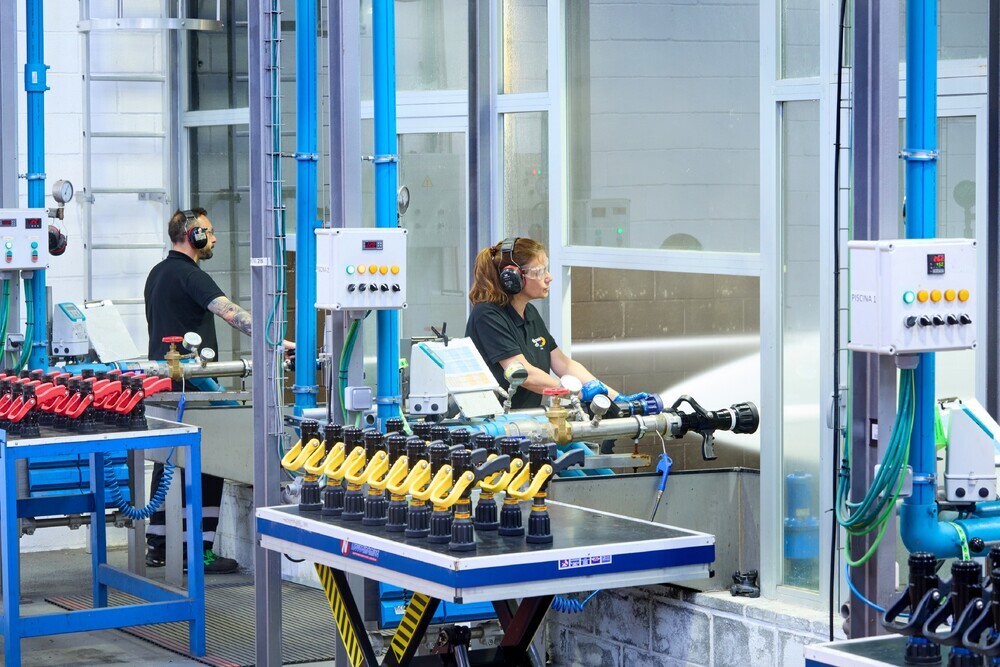
Every Nozzle Is Tested Individually Before Being Shipped
In firefighting, trust comes from knowing that your specific nozzle was checked, not just the design in general.
That’s why we test every nozzle individually, confirming:
- Full valve actuation
- Proper sealing at all pressures
- Stable, consistent stream patterns
- Structural integrity after pressurization
When you’re working in smoke and heat, you need confidence that the nozzle in your hands has already proven itself.
-
Reliable Performance in Harsh and Unpredictable Conditions
Firefighting equipment gets exposed to punishment: heat, debris, impacts, and pressure changes.
A safe nozzle must continue performing even when conditions deteriorate.
Our nozzles are engineered to stay reliable under:
- Thermal shock (Low and High Temperatures
- Dirty or debris-contaminated water
- Drops or impacts during operations
- Sudden changes in pressure
- Continuous aggressive movement
Firefighters need stream consistency when visibility and conditions are at their worst.
-
A Design That Gives Firefighters Total Control
A safe nozzle doesn’t just work, it feels right.
Our design approach focuses on:
- Smooth, controlled valve movement
- Tactile feedback you can feel, even with gloves
- Consistent resistance that tells you what the nozzle is doing
- Stable transitions between flow settings or patterns
When you’re advancing a line, you should never wonder whether the valve moved or whether the pattern selector engaged. Control must be clear and immediate.
Conclusion
A safe firefighting nozzle is one you can depend on, not just today, but during every shift. That requires:
- Valves proven through long-cycle testing
- Individual nozzle testing
- Emergency fail-safe shutoff capability
- Reliability in harsh environments
- A design that gives the operator total control
When a firefighter opens the line, the nozzle must respond instantly and predictably.
Because on the fireground, reliability isn’t optional, it’s essential.
Take a look to our complete firefighting product range: